QR Codes have transformed how restaurants interact with customers. From replacing printed menus to enabling contactless payments and promoting special offers, QR Codes provide a simple and efficient way to enhance customer experience while reducing operational costs.
In this article, we will explore how restaurants use QR Codes for digital menus, contactless services, and customer convenience, along with practical benefits for restaurant owners and customers alike.
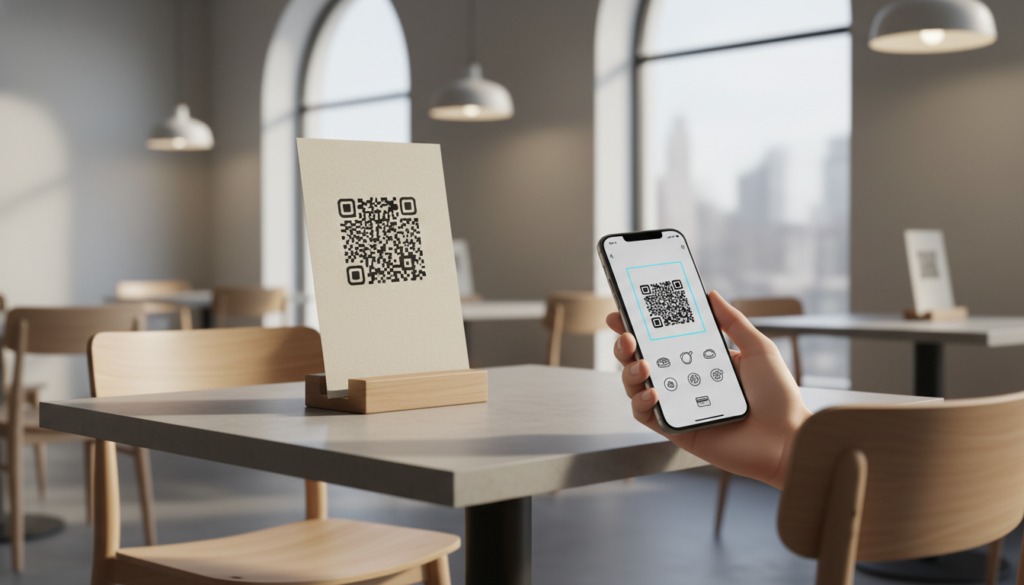
Why Restaurants Are Using QR Codes
Restaurants operate in fast-paced environments where speed, hygiene, and convenience matter. QR Codes help restaurants streamline operations while offering modern, customer-friendly solutions.
Key reasons restaurants adopt QR Codes include:
- Reduced physical contact
- Faster service
- Lower printing costs
- Improved customer experience
QR Codes act as a bridge between physical dining spaces and digital services.
Digital Menus Using QR Codes
What Is a QR Code Digital Menu?
A digital menu is an online version of a restaurant’s menu that customers can access by scanning a QR Code with their smartphone. Instead of handing out printed menus, restaurants place QR Codes on tables, counters, or walls.
Once scanned, the menu opens instantly in the customer’s browser.
Benefits of Digital Menus
Digital menus offer several advantages over traditional printed menus.
Easy updates
Restaurants can update prices, items, or descriptions without reprinting menus.
Cost savings
No recurring printing costs for new menus or seasonal updates.
Cleaner presentation
Eliminates worn-out or damaged paper menus.
Rich content
Menus can include images, descriptions, and allergen information.
Best Practices for QR Code Menus
To ensure smooth usage:
- Place QR Codes clearly on tables or stands
- Use large, scannable QR Codes
- Link to mobile-friendly menu pages
- Test menu loading speed
A well-designed digital menu improves the dining experience.
Contactless Experience in Restaurants
Why Contactless Services Matter
Customers increasingly prefer contactless interactions for hygiene and convenience. QR Codes help restaurants minimize physical contact while maintaining service quality.
Contactless Ordering
Some restaurants allow customers to:
- View menus
- Place orders
- Customize items
directly through QR Codes. Orders go straight to the kitchen system, reducing wait times and errors.
Contactless Payments
QR Codes are commonly used for digital payments. Customers can scan a payment QR Code to pay using:
- Mobile wallets
- Banking apps
- Online payment platforms
This reduces cash handling and speeds up checkout.
Contactless Feedback
Restaurants use QR Codes to collect feedback and reviews. A simple scan can take customers to:
- Feedback forms
- Review platforms
This encourages honest feedback without staff involvement.
Using QR Codes for Restaurant Offers and Promotions
Promotions and Discounts
Restaurants place QR Codes on:
- Table tents
- Receipts
- Posters
These QR Codes link to:
- Discount coupons
- Limited-time offers
- Special deals
This drives repeat visits and customer loyalty.
Loyalty Programs
QR Codes simplify loyalty programs by allowing customers to:
- Sign up instantly
- Collect digital points
- Access rewards
This removes the need for physical loyalty cards.
Seasonal and Special Offers
Restaurants can promote:
- Seasonal menus
- Festive discounts
- Happy hour deals
QR Codes allow quick updates without changing printed materials.
Improving Customer Convenience with QR Codes
Faster Access to Information
QR Codes let customers instantly access:
- Menus
- Prices
- Ingredients
- Offers
No waiting for staff or searching online.
Reduced Waiting Time
With QR Codes:
- Ordering is faster
- Payments are quicker
- Service flow improves
This is especially useful during peak hours.
Multilingual Support
Digital menus accessed via QR Codes can offer multiple language options, improving accessibility for international customers.
Benefits of QR Codes for Restaurant Owners
Restaurant owners also benefit significantly from QR Code usage.
Operational Efficiency
QR Codes reduce:
- Printing tasks
- Manual order handling
- Payment delays
This allows staff to focus on service quality.
Cost Reduction
Savings come from:
- Reduced menu printing
- Fewer order errors
- Lower administrative overhead
QR Codes are a low-cost solution with long-term benefits.
Better Data and Insights
When using trackable QR Codes, restaurants can analyze:
- Menu views
- Popular items
- Customer engagement
This data helps improve offerings and marketing strategies.
Common Mistakes Restaurants Should Avoid
While QR Codes are helpful, mistakes can reduce effectiveness.
- Using small or low-contrast QR Codes
- Linking to slow or non-mobile-friendly pages
- Not explaining what the QR Code is for
- Placing QR Codes in hard-to-scan locations
Avoiding these mistakes ensures a smooth customer experience.
Static vs Dynamic QR Codes for Restaurants
Static QR Codes are suitable for menus that rarely change.
Dynamic QR Codes are better for promotions, offers, and campaigns that require updates.
Choosing the right type depends on how often content changes.
Are Customers Comfortable Using QR Codes?
Most customers are familiar with QR Codes and find them easy to use. However, restaurants should:
- Offer assistance if needed
- Keep instructions simple
- Maintain alternative options when possible
This ensures inclusivity for all customers.
Future of QR Codes in Restaurants
QR Codes are likely to remain a key part of restaurant operations. As digital ordering and contactless services continue to grow, QR Codes will support:
- Smart menus
- Personalized offers
- Integrated payment systems
Restaurants that adopt QR Codes early gain a competitive advantage.
Conclusion
QR Codes have become a valuable tool for restaurants seeking to improve efficiency, hygiene, and customer convenience. From digital menus and contactless payments to promotions and loyalty programs, QR Codes enhance both customer experience and operational performance.
When implemented correctly, QR Codes help restaurants deliver faster service, reduce costs, and meet modern customer expectations. As dining continues to evolve, QR Codes will remain an important part of the restaurant industry.