QR Codes have evolved far beyond their original purpose of storing basic information. Today, they play a major role in digital payments, smart city infrastructure, and business growth strategies. As technology continues to advance, QR Codes are becoming smarter, more integrated, and more valuable across industries.
In this article, we explore the future of QR Codes, focusing on emerging trends, real-world use cases, and how QR Codes are shaping payments, smart cities, and business growth worldwide.
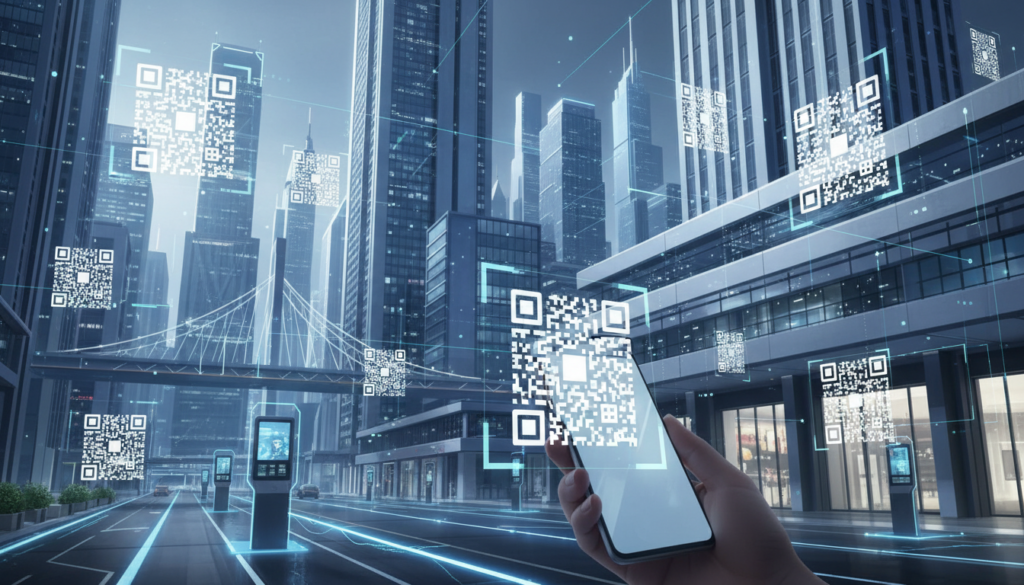
Why QR Codes Will Remain Relevant in the Future
QR Codes have survived multiple waves of technological change because they are:
- Simple to use
- Cost-effective
- Device-independent
- Easy to integrate
Unlike many technologies that require special hardware or apps, QR Codes work with almost every smartphone. This universal accessibility ensures their long-term relevance.
QR Codes in Digital Payments
Growth of QR Code Payments
QR Code–based payments have become one of the fastest-growing payment methods globally. Many countries now rely heavily on QR Codes for everyday transactions.
QR Code payments are used for:
- Retail purchases
- Restaurant bills
- Transportation
- Peer-to-peer transfers
They provide a simple alternative to cash and card payments.
Why QR Codes Are Ideal for Payments
QR Codes offer several advantages in payment systems:
- No physical contact required
- Low setup cost for businesses
- Fast transaction processing
- Compatibility with multiple payment apps
Small businesses benefit especially because QR Codes eliminate the need for expensive payment terminals.
Future Trends in QR Code Payments
In the future, QR Code payments are expected to:
- Integrate with biometric verification
- Support cross-border payments
- Become part of digital identity systems
As mobile banking and digital wallets grow, QR Codes will remain a key payment interface.
QR Codes in Smart Cities
What Are Smart Cities?
Smart cities use digital technology to improve infrastructure, public services, and quality of life. QR Codes play an important role in connecting citizens with digital services quickly and efficiently.
Public Information and Navigation
In smart cities, QR Codes are used on:
- Street signs
- Public transport stops
- Tourist attractions
Scanning a QR Code can provide:
- Real-time information
- Maps and directions
- Service updates
This reduces the need for physical information boards.
Transportation and Mobility
QR Codes are widely used in smart transportation systems for:
- Ticketing and passes
- Parking payments
- Bike and scooter rentals
These systems improve convenience and reduce congestion by streamlining access.
Government and Civic Services
Many smart cities use QR Codes to provide access to:
- Public forms
- Service portals
- Emergency information
This improves transparency and citizen engagement while reducing administrative costs.
QR Codes and Business Growth
Connecting Offline and Online Experiences
One of the biggest advantages of QR Codes for businesses is their ability to connect offline interactions with online platforms.
Businesses use QR Codes to:
- Drive traffic to websites
- Promote mobile apps
- Collect customer data
This integration supports long-term digital growth.
Enhancing Customer Engagement
QR Codes allow businesses to offer interactive experiences such as:
- Personalized offers
- Product tutorials
- Feedback collection
Engaged customers are more likely to return, recommend, and trust a brand.
Supporting Data-Driven Decisions
When combined with analytics, QR Codes help businesses understand:
- Customer behavior
- Campaign performance
- Engagement trends
This data helps optimize marketing strategies and improve return on investment.
QR Codes in Marketing and Advertising
Smarter Marketing Campaigns
Future marketing campaigns will rely more on QR Codes for:
- Interactive advertisements
- Location-based promotions
- Time-limited offers
QR Codes make campaigns measurable and adaptable.
Integration with Emerging Technologies
QR Codes are increasingly being integrated with:
- Augmented reality experiences
- AI-powered recommendations
- Marketing automation tools
This combination creates richer and more engaging customer journeys.
QR Codes in Retail and E-Commerce
Personalized Shopping Experiences
Retailers use QR Codes to deliver:
- Personalized product suggestions
- Loyalty rewards
- In-store navigation
This improves customer satisfaction and conversion rates.
Inventory and Supply Chain Management
QR Codes are also used behind the scenes to:
- Track inventory
- Manage logistics
- Improve supply chain transparency
These operational benefits contribute directly to business growth.
QR Codes in Healthcare and Education
Healthcare Applications
In healthcare, QR Codes are used for:
- Patient records access
- Appointment check-ins
- Medication information
They improve efficiency while reducing paperwork.
Education and Learning
Educational institutions use QR Codes to:
- Share study resources
- Track attendance
- Provide digital certificates
These use cases will continue to expand as digital education grows.
Security and Privacy in the Future of QR Codes
As QR Code usage increases, security and privacy will remain important.
Future improvements may include:
- Encrypted QR Code data
- Secure authentication layers
- Better user awareness tools
These advancements will help maintain trust and safety.
Challenges Facing QR Codes
Despite their advantages, QR Codes face some challenges:
- Misuse by scammers
- Overuse without clear value
- Poor design and implementation
Addressing these challenges through education and best practices is essential for long-term success.
Will QR Codes Be Replaced by New Technology?
While new technologies continue to emerge, QR Codes are unlikely to disappear soon. Their simplicity, low cost, and wide adoption make them difficult to replace completely.
Instead of being replaced, QR Codes are more likely to:
- Evolve alongside new technologies
- Integrate with future digital systems
- Expand into new industries
How Businesses Should Prepare for the Future
To stay ahead, businesses should:
- Adopt QR Codes strategically
- Focus on user experience
- Keep content mobile-friendly
- Monitor performance and trends
Using QR Codes thoughtfully ensures long-term value.
Conclusion
The future of QR Codes is strong and full of opportunity. From digital payments and smart cities to business growth and marketing innovation, QR Codes continue to play a vital role in modern digital ecosystems.
As technology evolves, QR Codes will become more intelligent, secure, and integrated into everyday life. Businesses, governments, and individuals who understand and adapt to these trends will benefit the most from this simple yet powerful technology.