QR Codes are widely used for sharing digital information quickly, but not all QR Codes work the same way. One of the most important distinctions beginners and businesses need to understand is the difference between static QR Codes and dynamic QR Codes.
Choosing the right type of QR Code can affect flexibility, usability, and long-term effectiveness. In this guide, we will clearly explain what static and dynamic QR Codes are, how they differ, their pros and cons, and when to use each one.
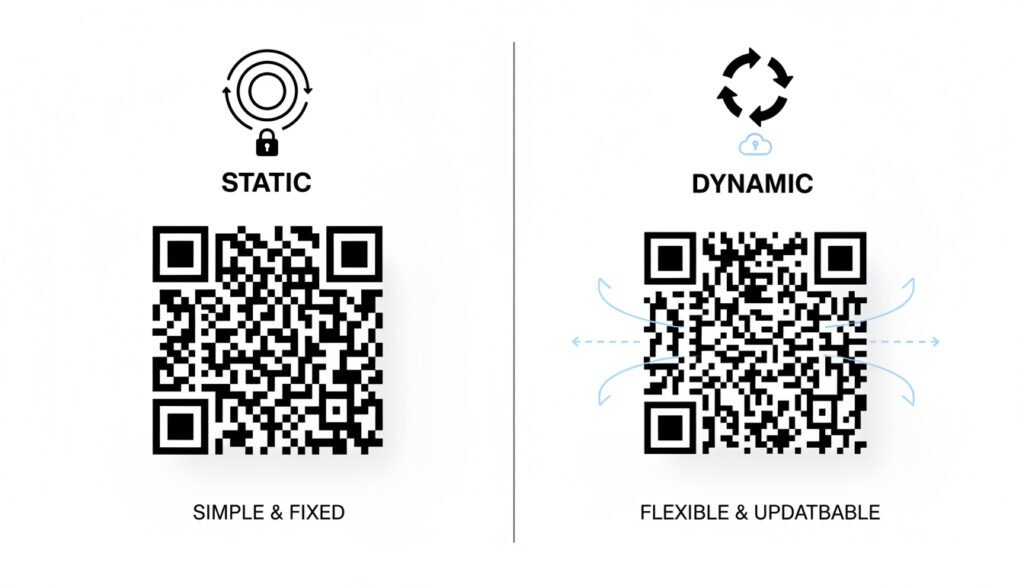
What Are Static QR Codes?
A static QR Code is a QR Code in which the information is permanently embedded at the time of creation. Once generated, the data inside the QR Code cannot be changed.
For example, if a static QR Code contains a website URL and you later want to update that link, you would need to create an entirely new QR Code.
Static QR Codes are simple, reliable, and widely used for fixed information.
Common Data Stored in Static QR Codes
- Website URLs
- Text messages
- Phone numbers
- Email addresses
- WiFi credentials
What Are Dynamic QR Codes?
A dynamic QR Code stores a short redirect URL instead of the actual data. This redirect points to content that can be edited later without changing the QR Code itself.
This means the same QR Code can lead to different content over time, making dynamic QR Codes more flexible.
Dynamic QR Codes are often used in marketing, analytics, and campaigns where content updates are needed.
Key Differences Between Static and Dynamic QR Codes
Understanding the differences helps you decide which type suits your needs.
Data Flexibility
Static QR Codes contain fixed data that cannot be edited after creation.
Dynamic QR Codes allow the destination content to be updated at any time.
Editability
Static QR Codes must be regenerated if changes are required.
Dynamic QR Codes can be edited without reprinting or replacing the QR Code.
Tracking and Analytics
Static QR Codes do not support scan tracking.
Dynamic QR Codes can track scan data such as location, device type, and scan time.
Cost
Static QR Codes are usually free.
Dynamic QR Codes are often offered as part of paid plans.
Complexity
Static QR Codes are simple and easy to use.
Dynamic QR Codes involve redirect systems and dashboards.
Pros and Cons of Static QR Codes
Advantages of Static QR Codes
Free to use
Static QR Codes are available on most QR Code generators without cost.
Permanent and reliable
Since the data is fixed, there is no dependency on external servers.
Simple and fast
They are easy to generate and work instantly.
Ideal for long-term use
Best suited for information that never changes.
Disadvantages of Static QR Codes
No editing after creation
Any change requires generating a new QR Code.
No scan tracking
You cannot measure performance or user engagement.
Limited flexibility
Not suitable for campaigns that require updates.
Pros and Cons of Dynamic QR Codes
Advantages of Dynamic QR Codes
Editable content
You can change the destination without creating a new QR Code.
Scan tracking and analytics
Useful for measuring marketing performance.
Better for campaigns
Ideal for promotions, advertisements, and short-term offers.
More control
Content management dashboards provide advanced options.
Disadvantages of Dynamic QR Codes
Usually paid
Most providers charge for dynamic QR Code features.
Dependency on service provider
If the service stops, the QR Code may stop working.
More complex
Requires management and maintenance.
Use Cases for Static QR Codes
Static QR Codes are best used when information is permanent and does not need updates.
Business Cards
Static QR Codes are ideal for contact details and portfolio links.
WiFi Access
WiFi credentials rarely change, making static QR Codes suitable.
Printed Documents
Brochures, manuals, and packaging benefit from static QR Codes.
Educational Materials
Study resources and reference links that remain constant.
Use Cases for Dynamic QR Codes
Dynamic QR Codes are suitable when flexibility and tracking are required.
Marketing Campaigns
Campaign links, discount pages, and promotions that change over time.
Event Management
Event schedules, venue updates, and registration links.
Product Promotions
Landing pages that evolve with new offers or information.
Performance Tracking
Businesses that need insights into user engagement.
Static vs Dynamic QR Codes: Comparison Table
| Feature | Static QR Code | Dynamic QR Code |
|---|---|---|
| Editable After Creation | No | Yes |
| Scan Analytics | No | Yes |
| Cost | Free | Usually Paid |
| Long-Term Reliability | High | Depends on provider |
| Best For | Permanent information | Marketing & campaigns |
Which QR Code Should You Choose?
The choice depends on your purpose.
Choose static QR Codes if:
- Information will not change
- You need a free and simple solution
- You want permanent reliability
Choose dynamic QR Codes if:
- You need to update content regularly
- You want scan tracking
- You are running marketing campaigns
For most beginners and small businesses, static QR Codes are often sufficient.
Common Mistakes to Avoid
- Using static QR Codes for changing content
- Printing dynamic QR Codes without understanding costs
- Ignoring testing before public use
- Choosing paid solutions when free options are enough
Understanding your needs before generating a QR Code helps avoid unnecessary issues.
Conclusion
Static and dynamic QR Codes serve different purposes, and neither is better in all situations. Static QR Codes are simple, reliable, and ideal for permanent information, while dynamic QR Codes offer flexibility, tracking, and advanced control.
By understanding their differences, advantages, and use cases, you can choose the right QR Code type for your personal or business needs and ensure an effective user experience.